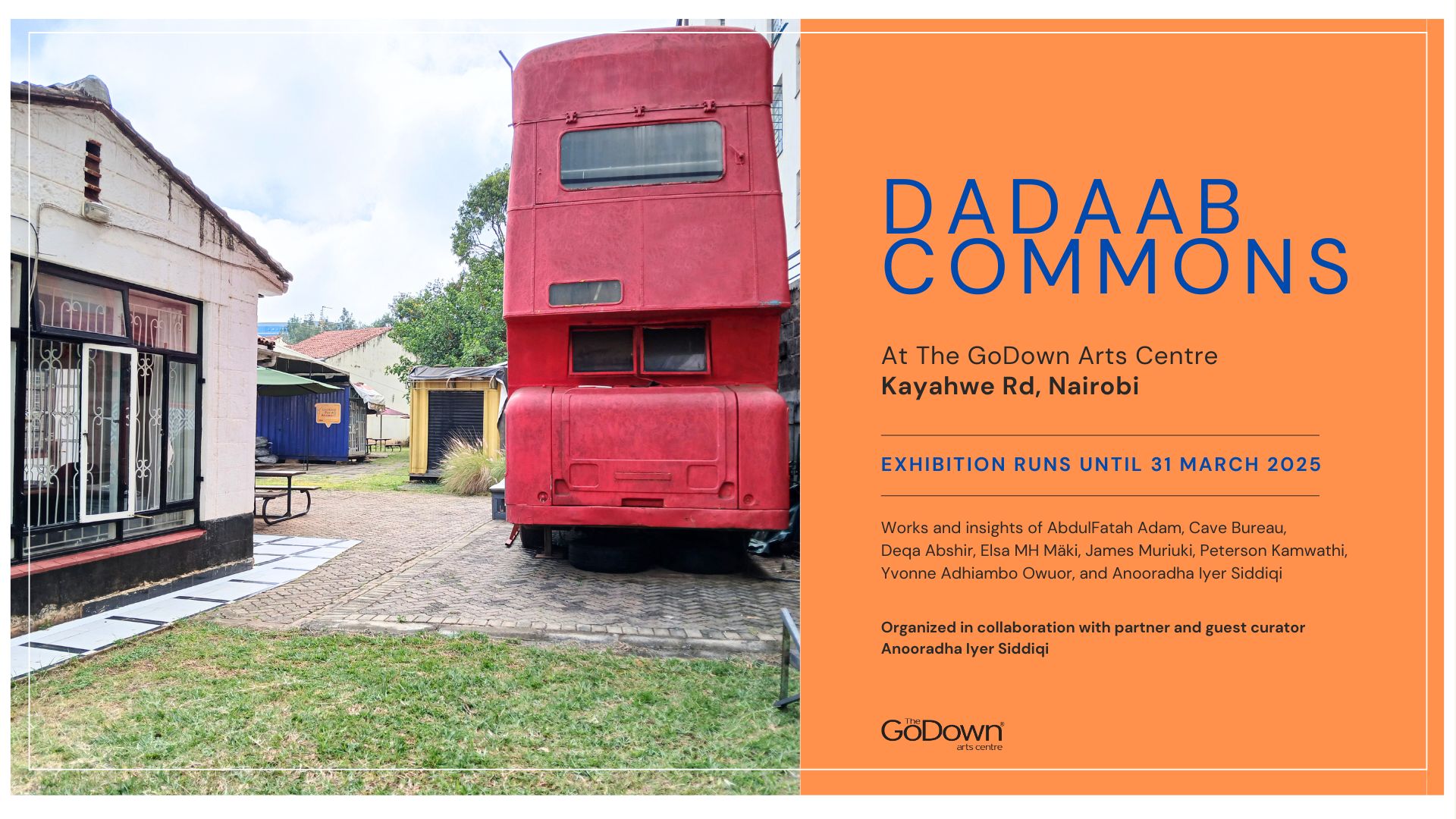
Dadaab Commons
What does a refugee camp teach us about making a commons? Let us think with the multigenerational refugee camps near the town of Dadaab, Kenya. Established in 1991 in lands crossing present-day Kenya, Somalia, and Ethiopia, the Dadaab refugee camp complex has been one of the UNHCR’s largest and longest running establishments, currently engaged in a proposed process of integration into the Kenyan state. Kenya’s third largest grouping of people, after Nairobi and Mombasa, the Dadaab settlements have systematized architectural and planning practices carried out since, in international responses to crises elsewhere in the world.
Yet, looking closely at Dadaab, we find African ways of knowing. These are expressed in generations of migratory building and craft practices. Ancient understandings of the landscape and ecology. Historical particularities and a politics in oceanic, riverine, mountain, desert, plains, and urban relations. Song and oral traditions of sharing. Socialities and ways of living on land that supersede the proprietary. We acknowledge the elders and communities in Dadaab, whose lives and work hold meaning for us all.
.
Acknowledging the ecologies and aesthetics of a camp settlement and the land it occupies, the partitions and borders it reifies, the domesticities insurgent in the act of sheltering in emergency, and the sedentarizations embedded in interregional and international migration is part of our artistic and architectural embrace of Dadaab.
We move beyond reductive understandings of refugee camps, and turn to ways of life and habitation undertaken by people in extraordinary conditions. Our works reflect the architectures and ecologies of Dadaab, which open onto knowledges common to us all. In this, we hope to find ways of living together, and building an intellectual commons.
Anooradha Iyer Siddiqi
The GoDown Arts Centre, March 2025
Dadaab Commons includes the works and insights of AbdulFatah Adam, Cave Bureau, Deqa Abshir, Elsa MH Mäki, James Muriuki, Peterson Kamwathi, Yvonne Adhiambo Owuor, and Anooradha Iyer Siddiqi, with contributions from Awjama Cultural Centre in Nairobi, Thirupurasundari Sevvel and Devika Prabhakaran of Nam Veedu Nam Oor Nam Kadhai in Chennai, Anjali Grant in Seattle, and Lauren Hardy in New York. Dadaab Commons is organized by the GoDown Arts Centre and partner and guest curator Anooradha Iyer Siddiqi. Organic materials from the exhibition will be donated to the local community for cooking fuel and building material.
Exhibition
Dates: March 15 - April 19, 2025
The GoDown Arts Centre, Kayahwe Rd, Nairobi, Kenya
Works and insights of AbdulFatah Adam, Cave Bureau, Deqa Abshir, Elsa MH Mäki, James Muriuki, Peterson Kamwathi, Yvonne Adhiambo Owuor, and Anooradha Iyer Siddiqi.
Organized in collaboration with partner and guest curator Anooradha Iyer Siddiqi, Assistant Professor of Architecture at Barnard College and Columbia University.
Explore Works
Peterson Kamwathi
Peterson Kamwathi
Untitled
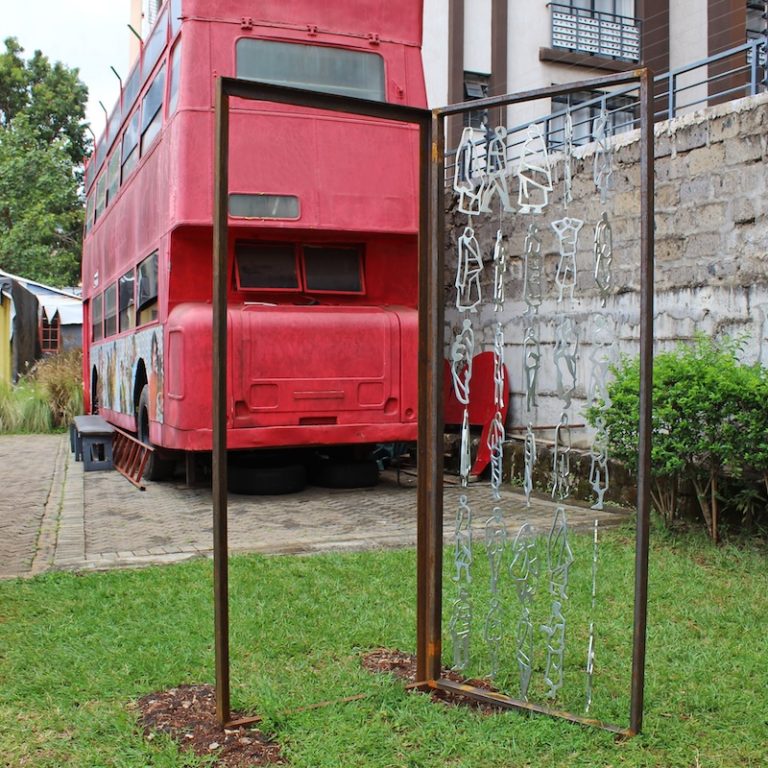
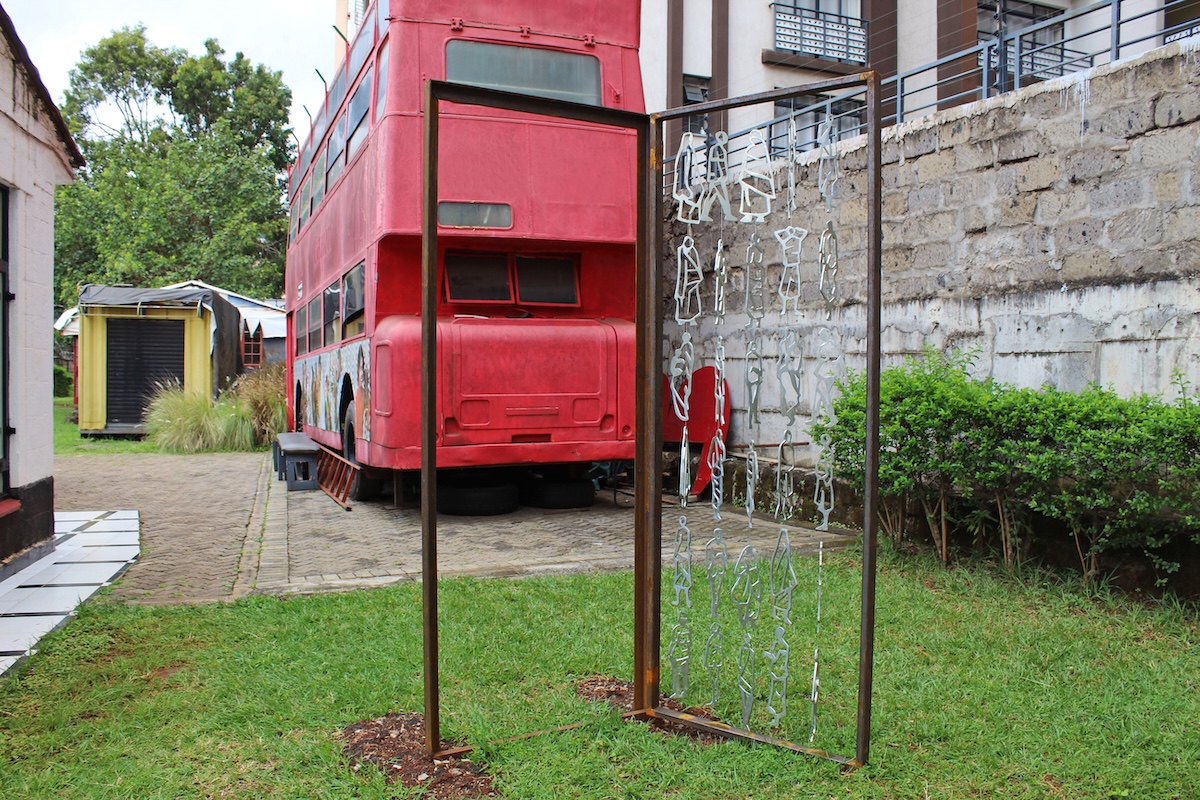
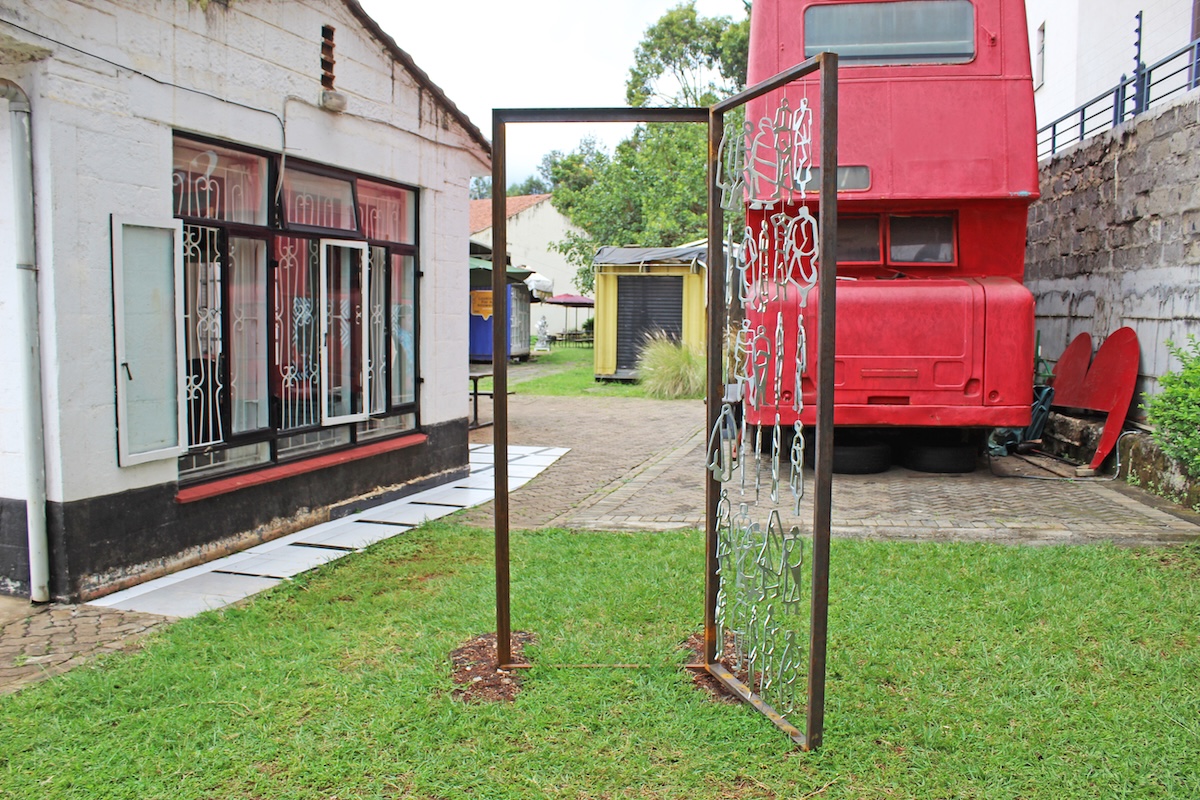
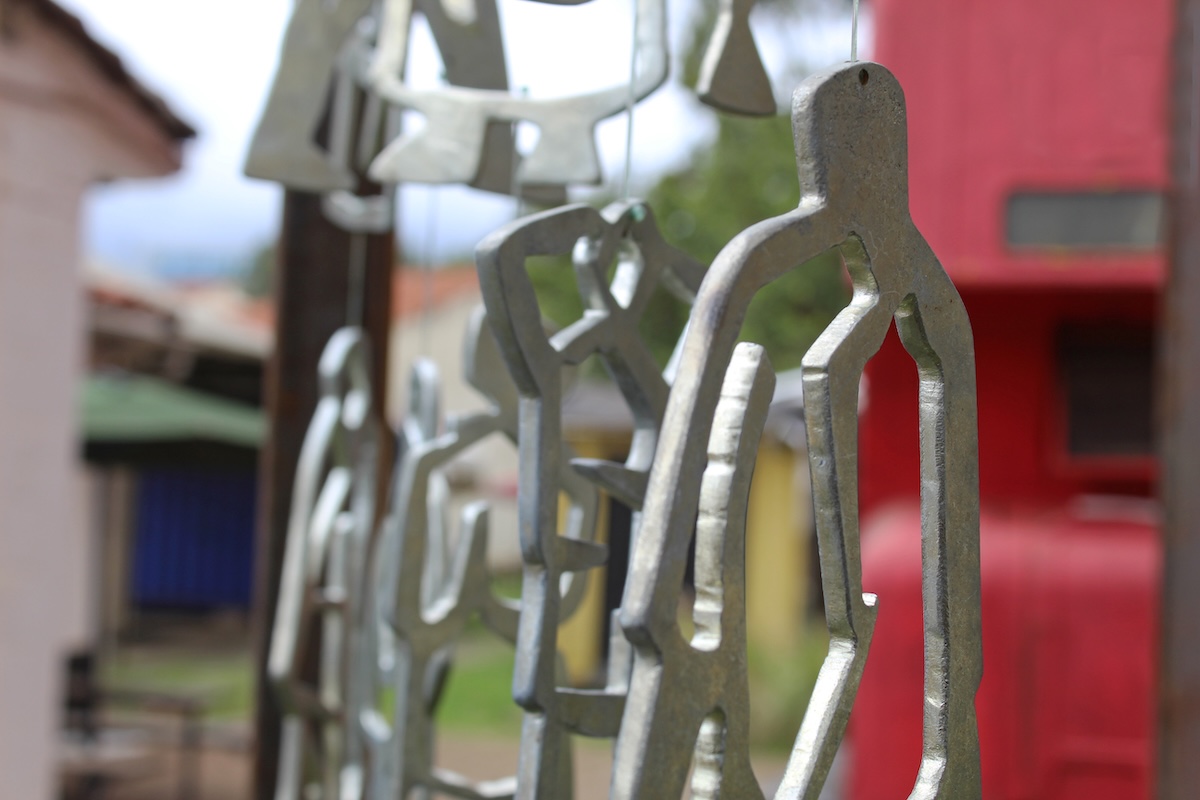
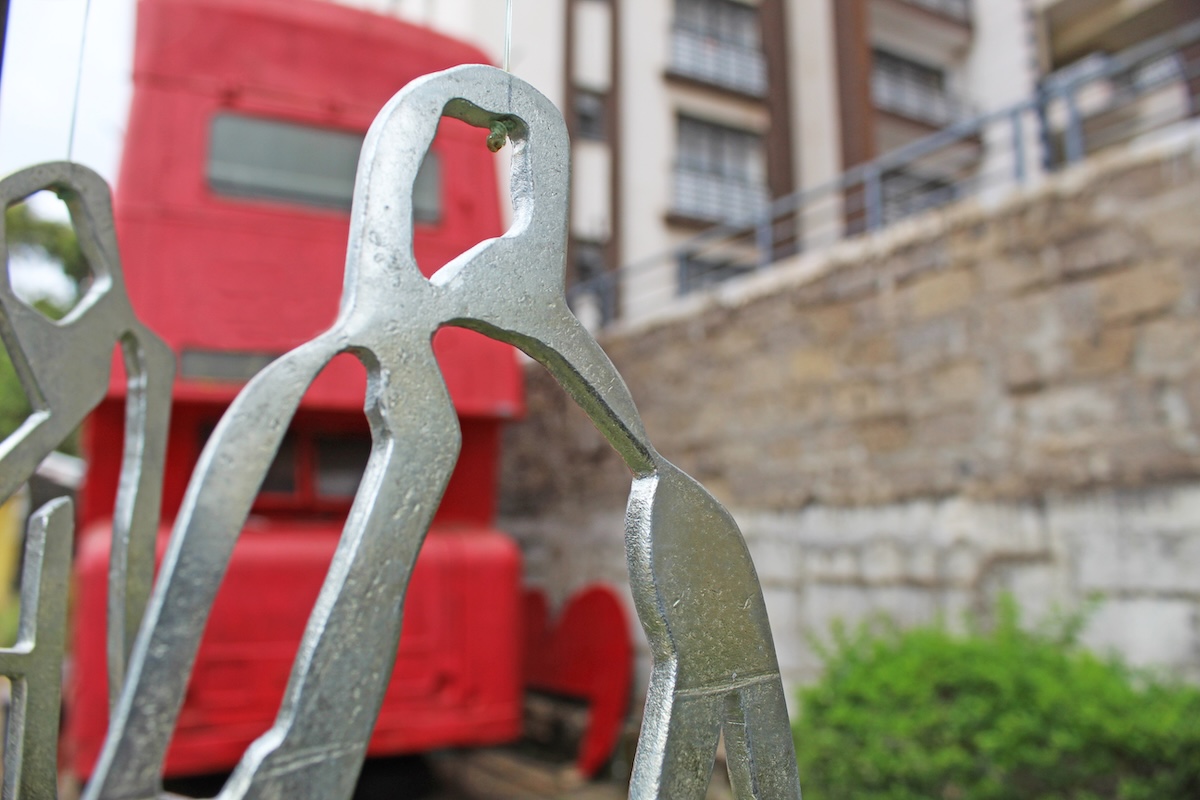
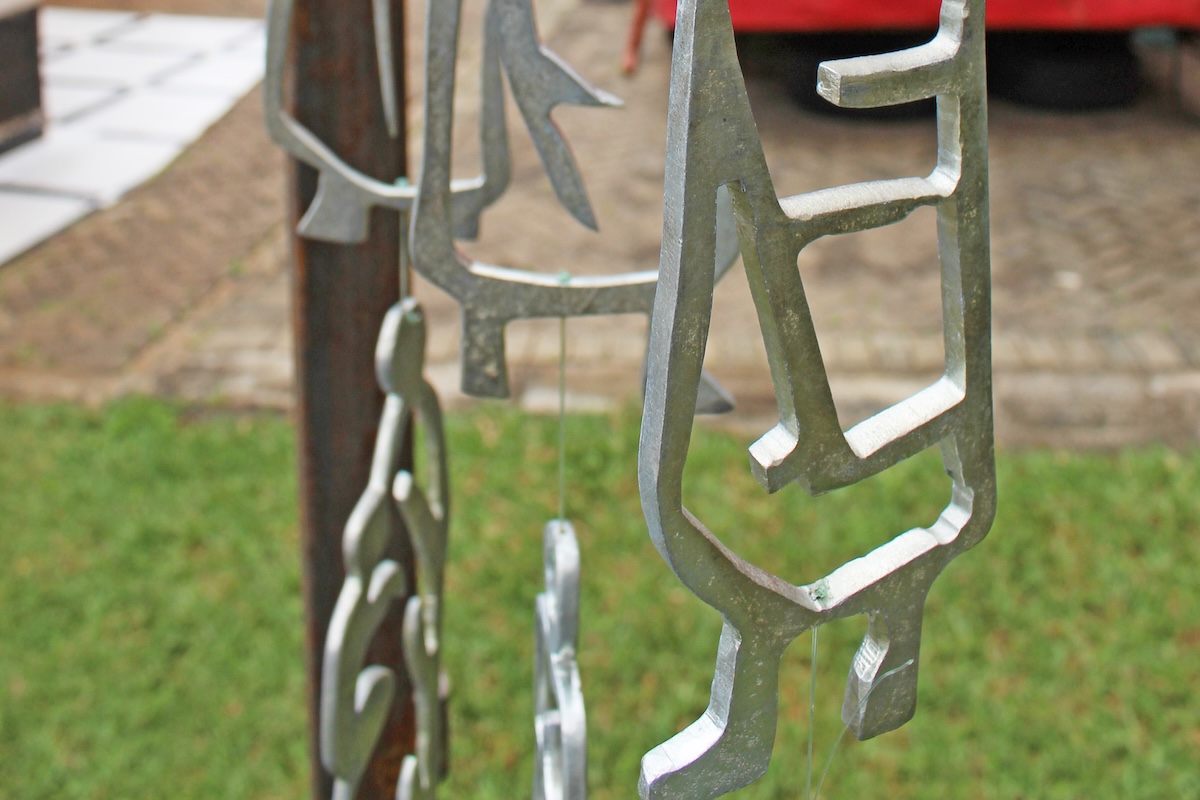
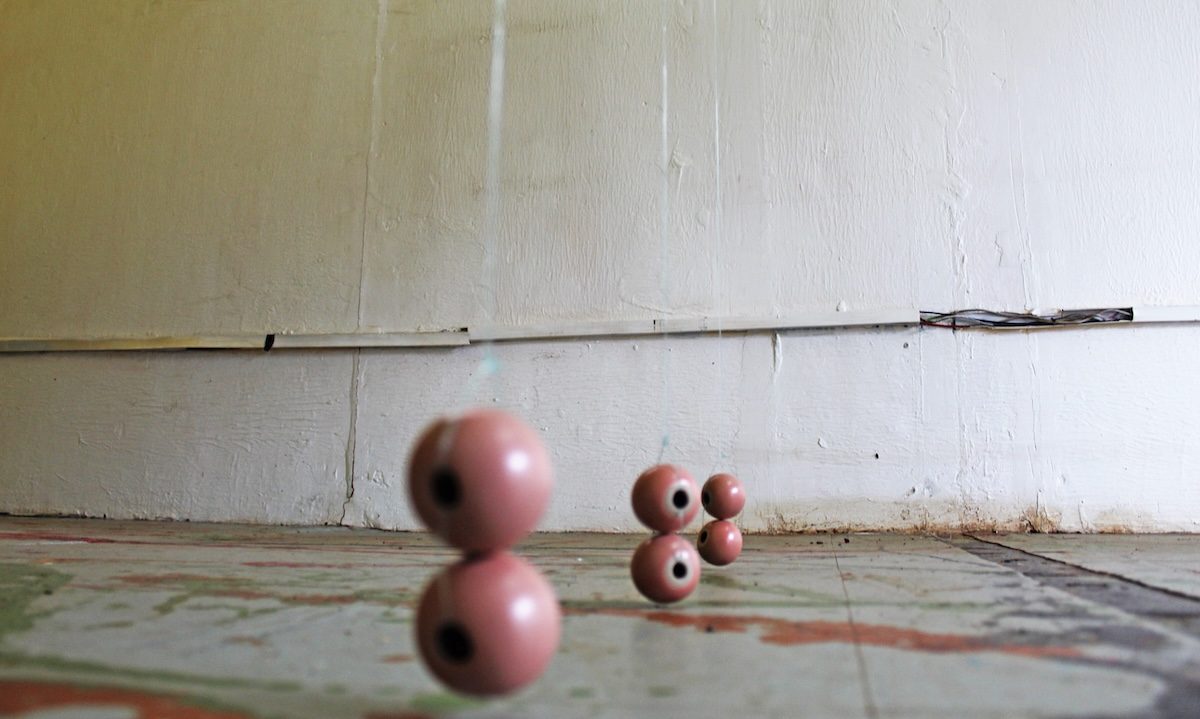
Peterson Kamwathi’s Untitled imagines a doorway as a form of access, offering possibilities of inclusion. Acknowledging that a doorway is also a potential barrier, this portal is porous, the door leaf spanned by a membrane of suspended elements. They recall the beads that hang from door frames across Kenya and other parts of the world, which invite us to part them with our hands and move through the door.
The suspended galvanized steel elements are modeled on photographic documentation of people within the Dadaab camps and the refugee processing points outside. Kamwathi fashioned the pieces from ink sketches drawn from photographs, relying on the rigidity, yet malleability, of steel to build a membrane. Citing figures from Dadaab, Untitled remarks on access, inviting us to walk through a door.
Cave Bureau
Cave Bureau
Merti
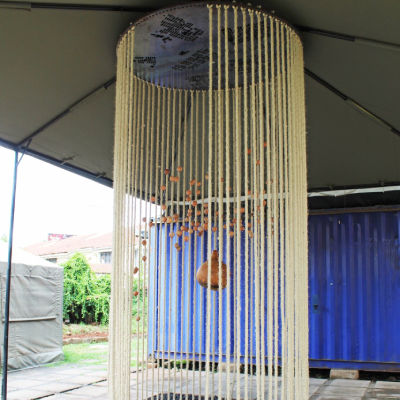
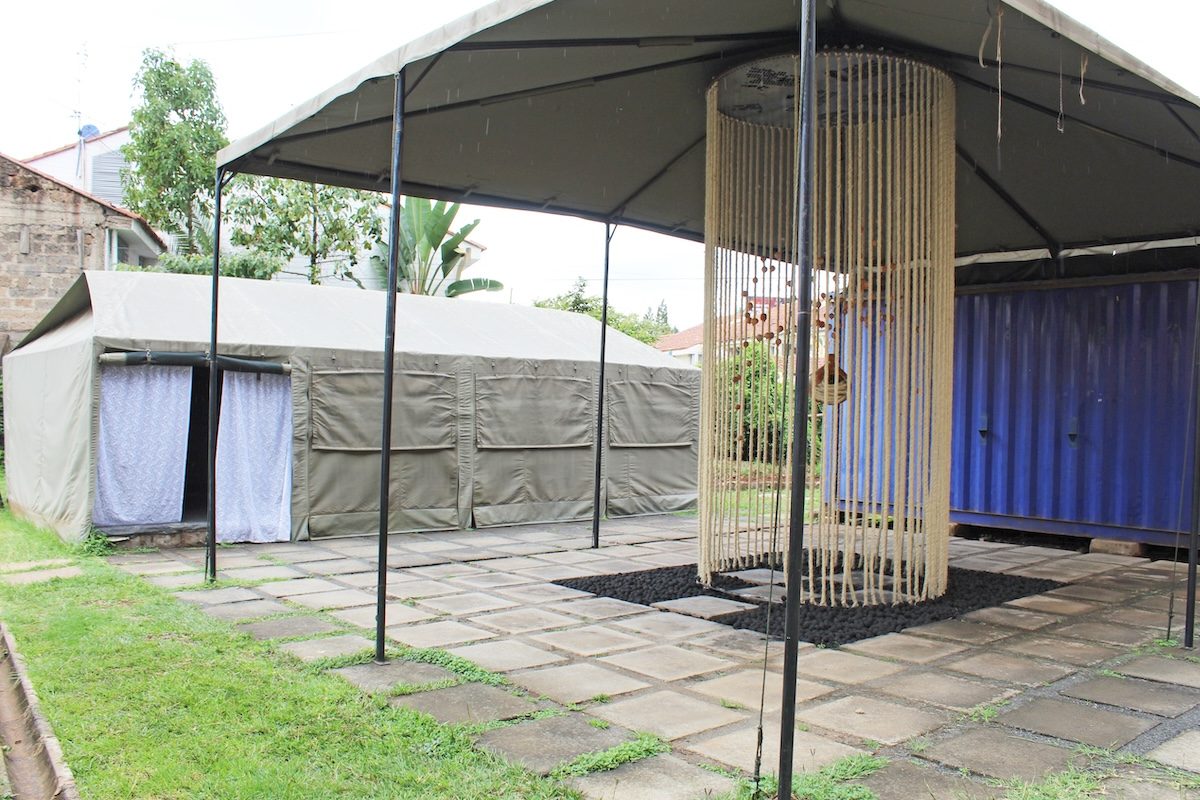
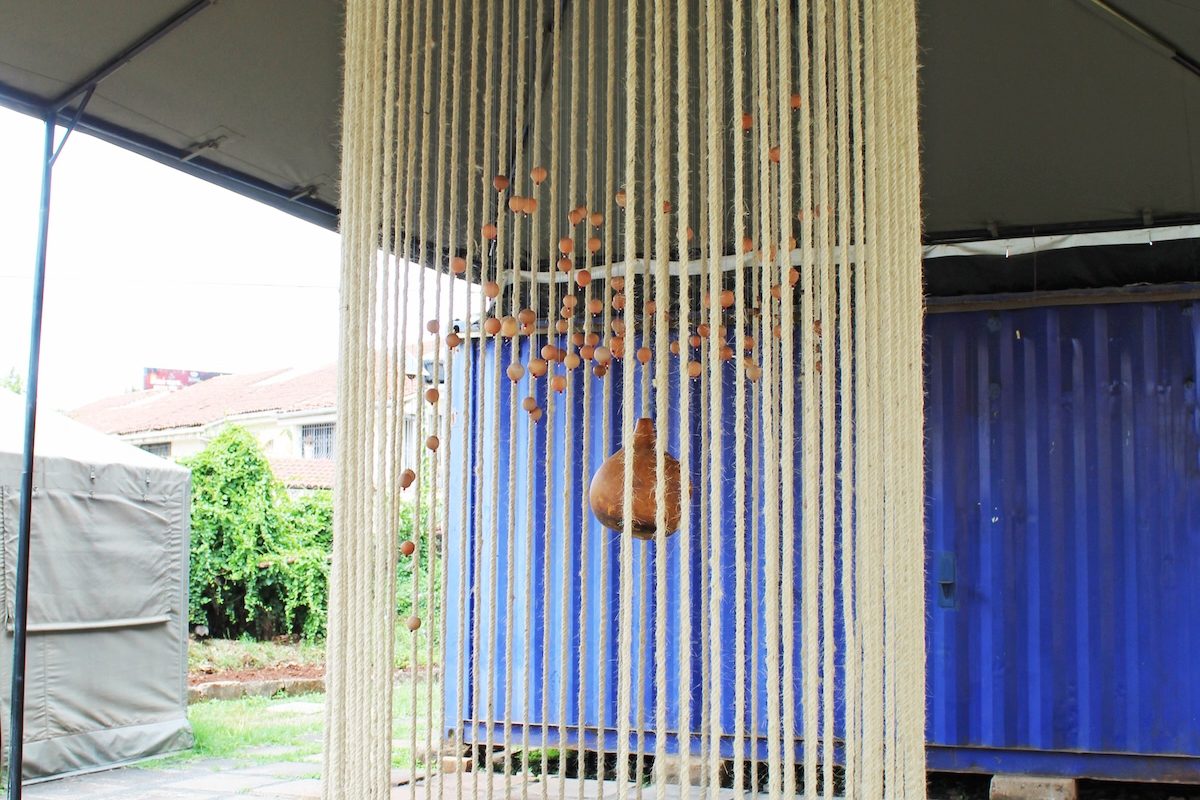
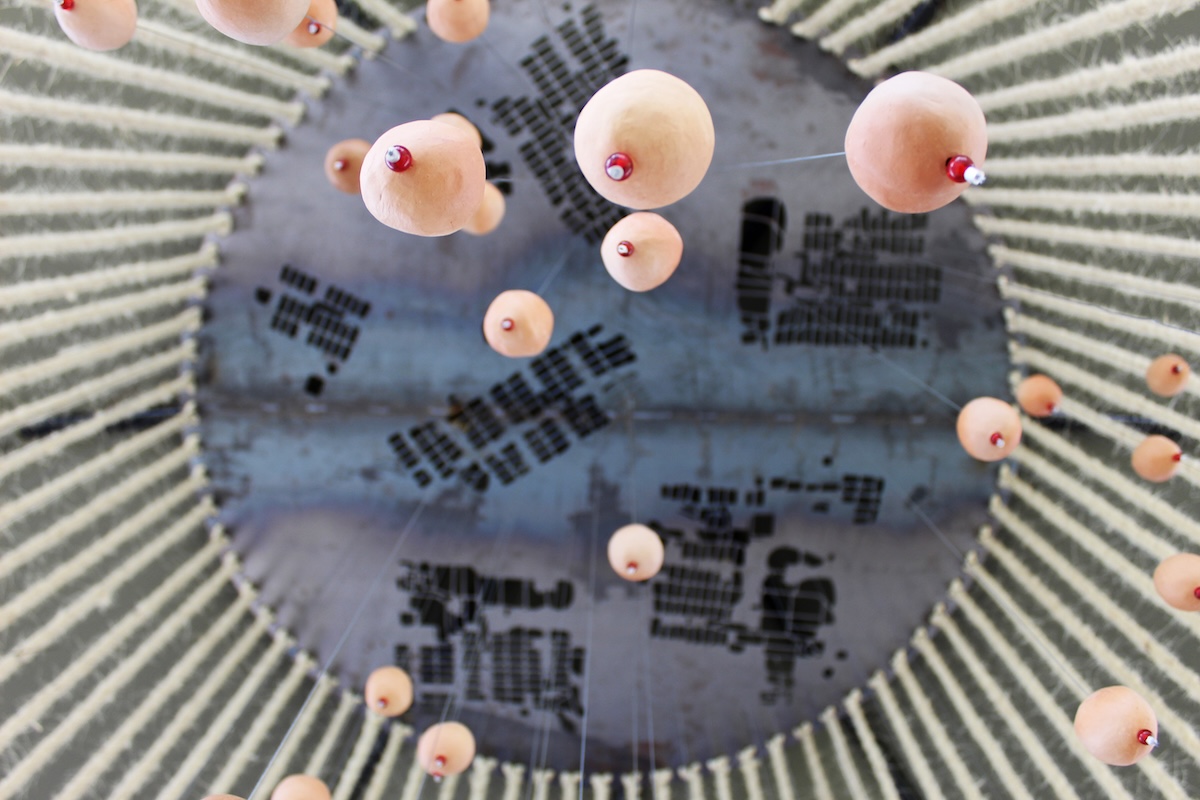
At the top of Cave Bureau’s Merti is a steel disc, laser cut with the profile of plans of settlements in the Dadaab complex. The worked steel mimics the worked ground, deliberately worked land, ground that has been settled upon, the crust of the earth. Shaped on an urban scale, the constellation of settlement points define the entire region.
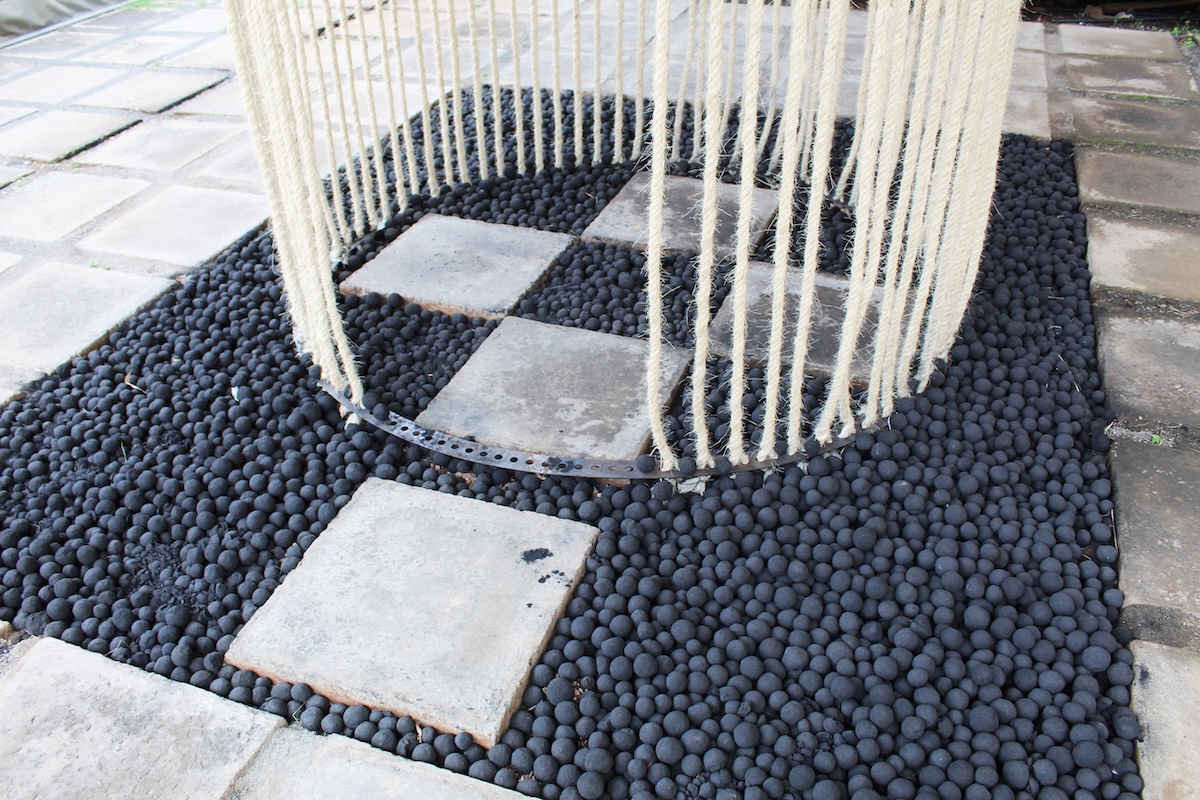
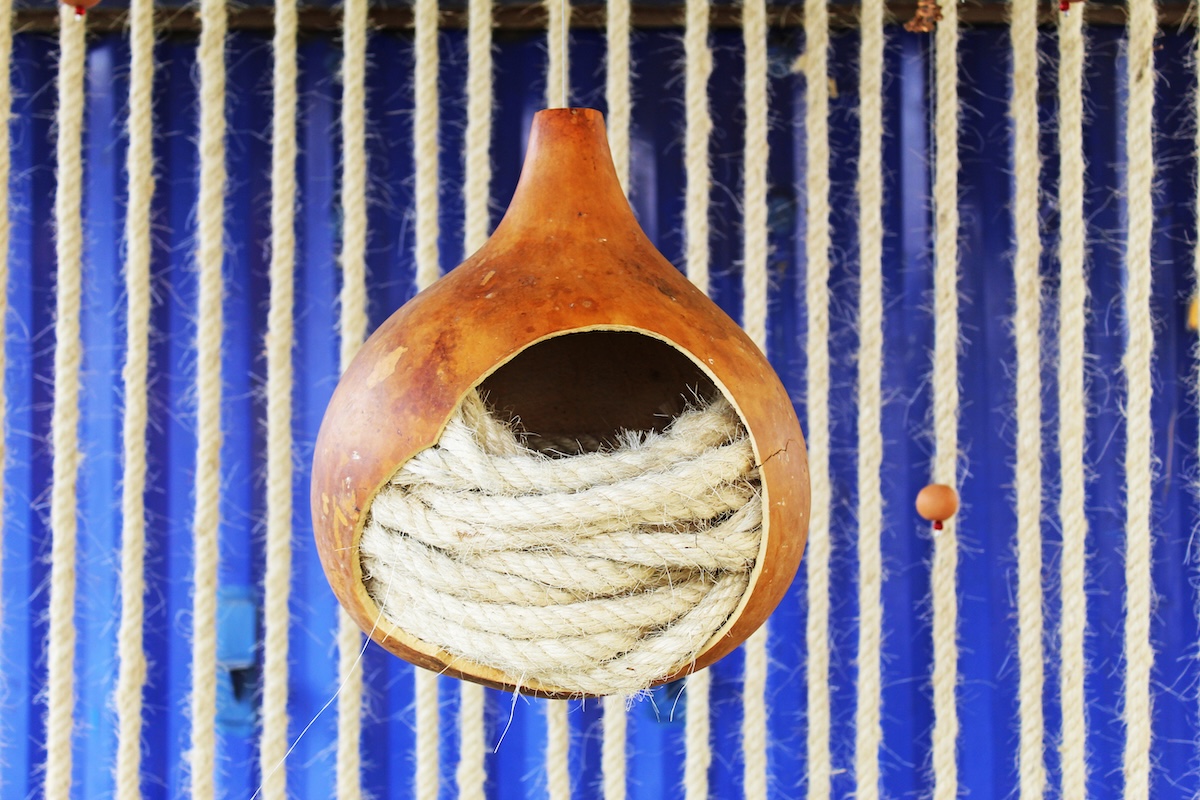
Beneath that, sisal hemp ropes hang to form an inhabitable structure, tapping into the ground below the camps, toward a Jurassic water catchment infrastructure: the Merti aquifer. The sisal structure represents the stasis between earth and aquifer, a habitable realm.
A new ground is set below by eco-briquettes, on which we can stand and look above through an archaeological topography to the steel cloud above, light seeping through its cracks into this imagined underground habitation.
Inhabiting this spatial realm connects us to an underground, a kind of undercommons, bringing a geo-consciousness into the field of view, so that we understand what development and urbanism mean, the unique urban manifestation of Dadaab.
The suspended galvanized steel elements are modeled on photographic documentation of people within the Dadaab camps and the refugee processing points outside. Kamwathi fashioned the pieces from ink sketches drawn from photographs, relying on the rigidity, yet malleability, of steel to build a membrane. Citing figures from Dadaab, Untitled remarks on access, inviting us to walk through a door.
Deqa Abshir
Deqa Abshir
The Intimate Fabric of Identity
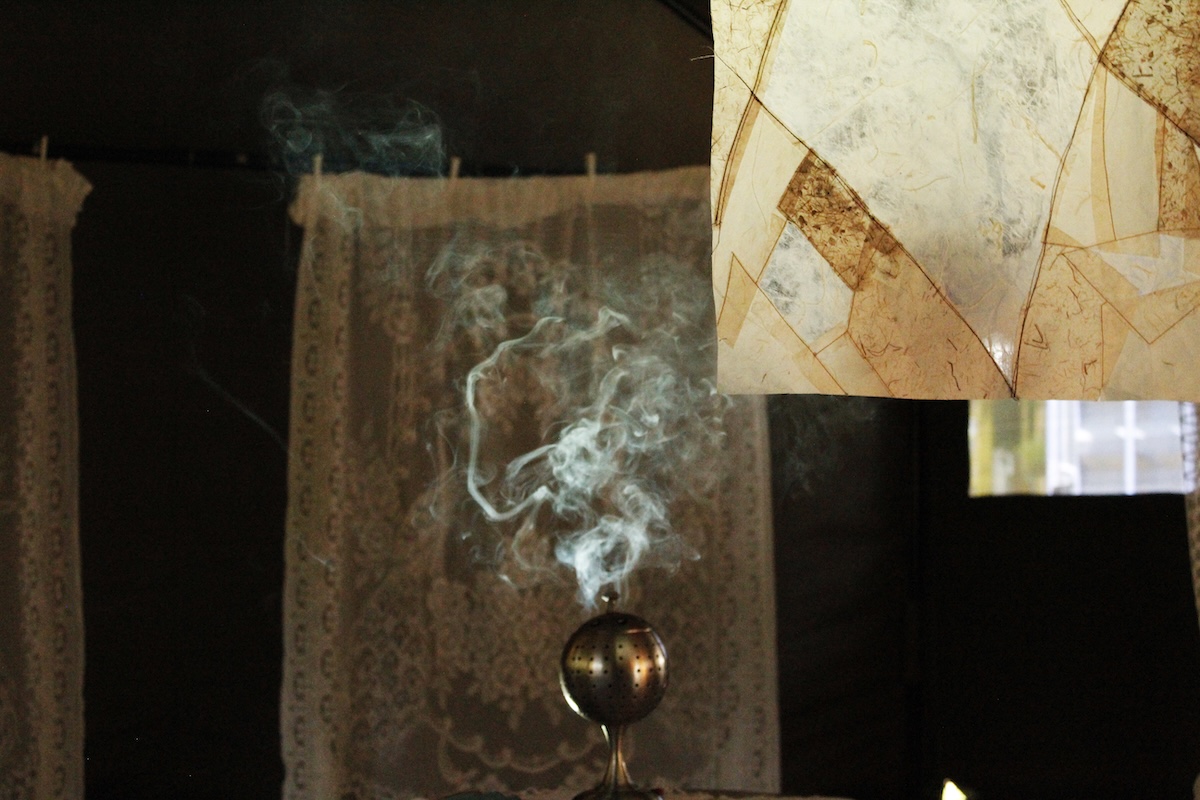
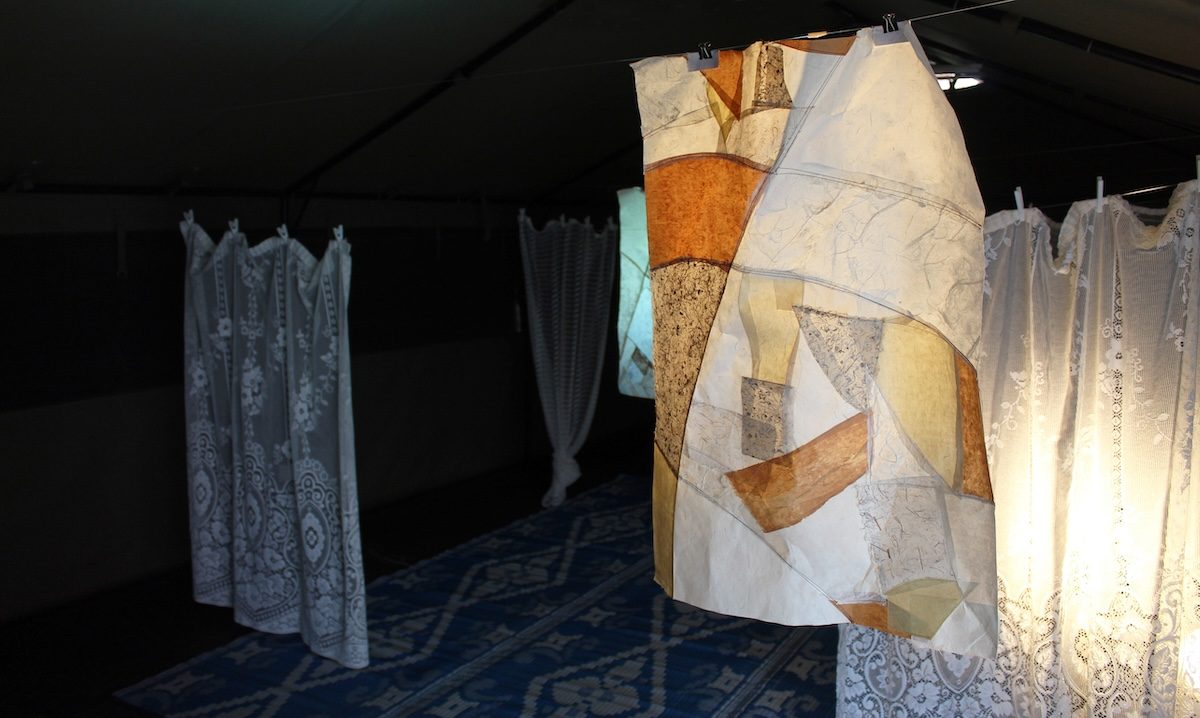
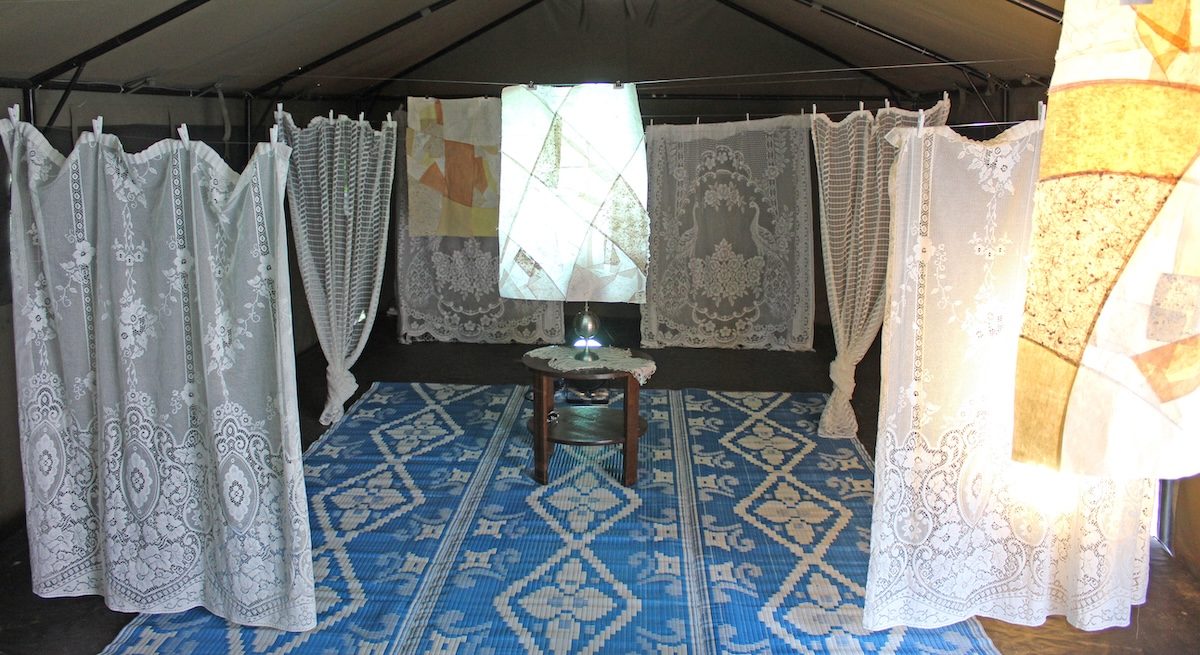
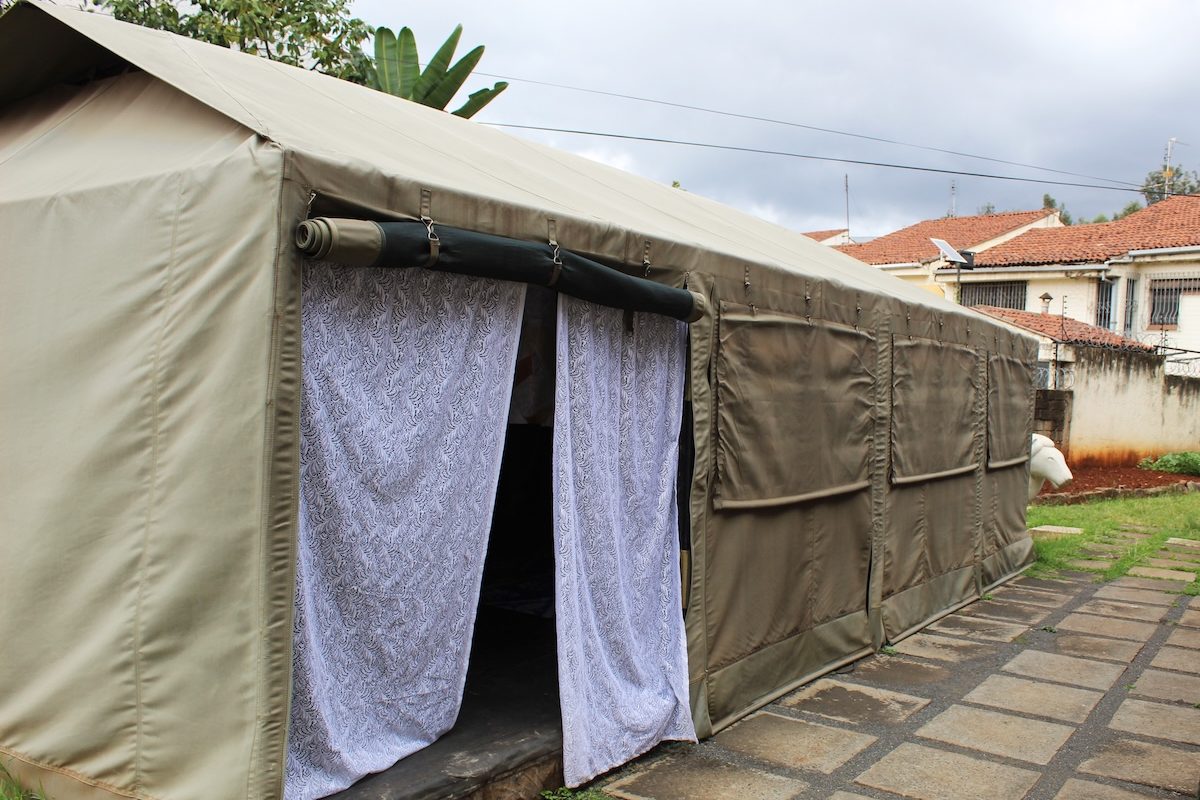
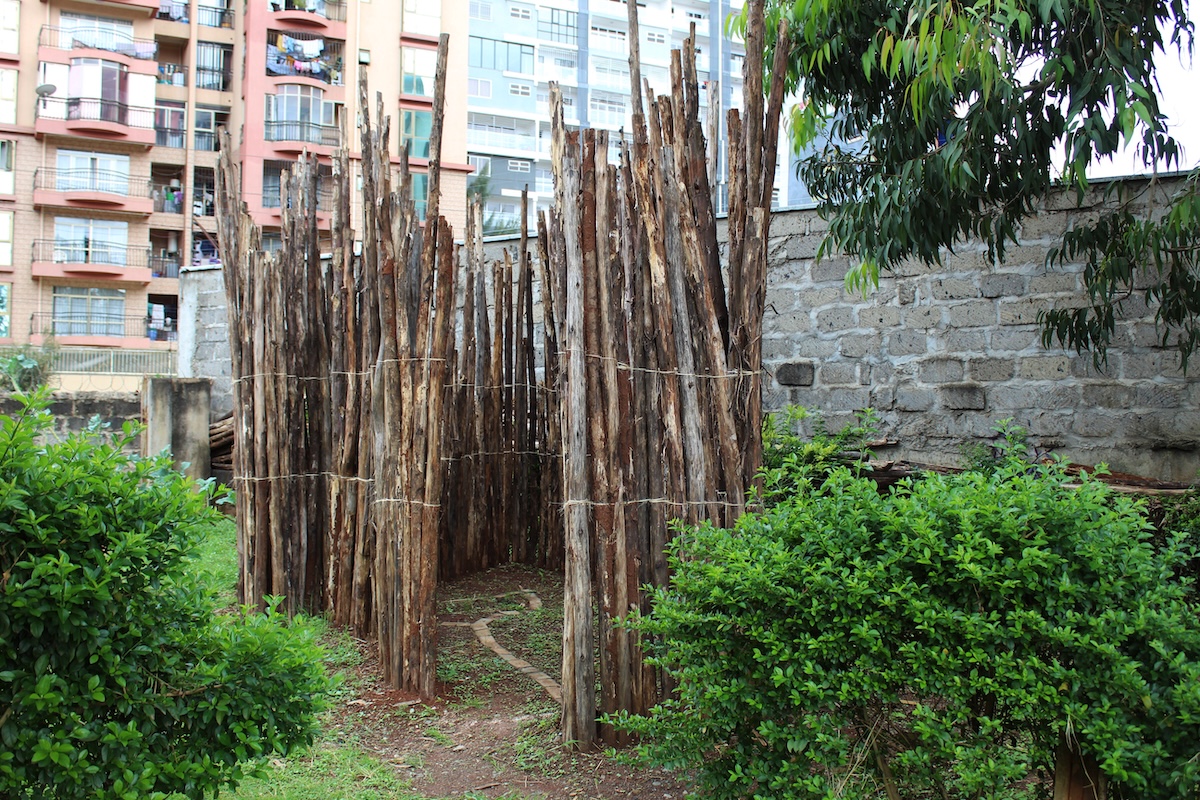
The Somali waab – an architecture for dwelling that persists beyond cultural ritual – offers an allegory for Dadaab, a place that is simultaneously liminal and permanent, a site of displaced identity and the rebuilding of a new identity: a community whose interiority is at odds with its exteriority.
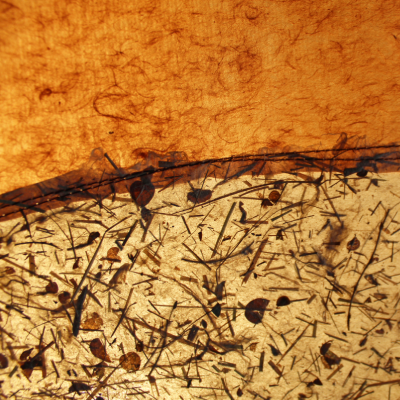
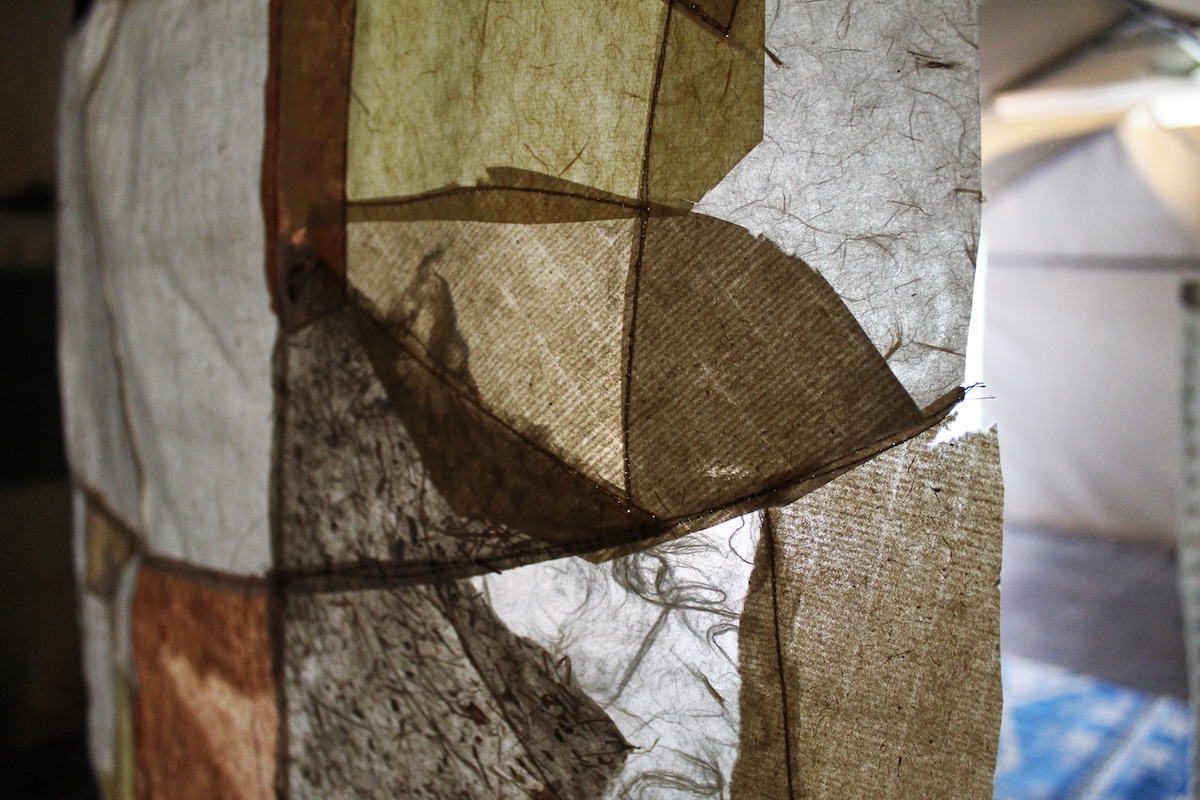
The handmade hereditary craft papermaking processes Deqa Abshir used for The Intimate Fabric of Identity are representative of the breaking down and re-forming of identity. Through the exploration of the structural interior of a waab and the experience of light and privacy it provides to a space, Abshir explores the interiority redefining individual identity, while exploring how this contributes to a collective identity, within Dadaab, and in an imagination of Dadaab. The overlapping processes of self-identifying and shaping collective identity are intertwined with the creation of a commons.
Elsa MH Mäki
Elsa MH Mäki
Jitterbug
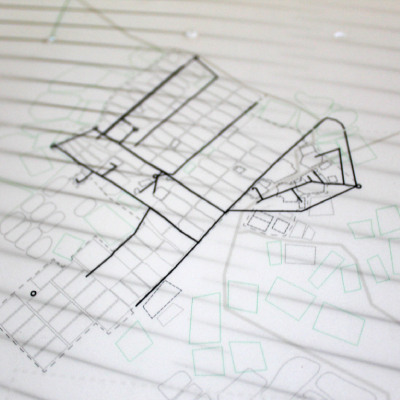
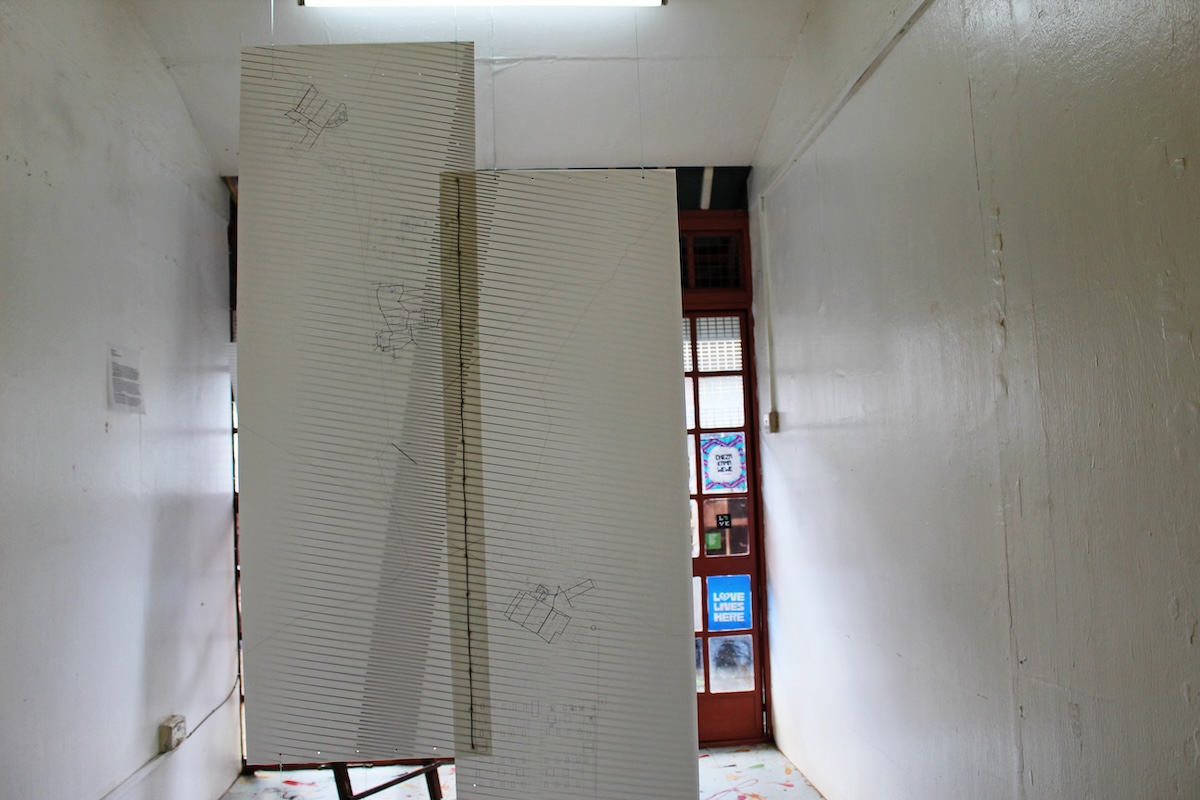
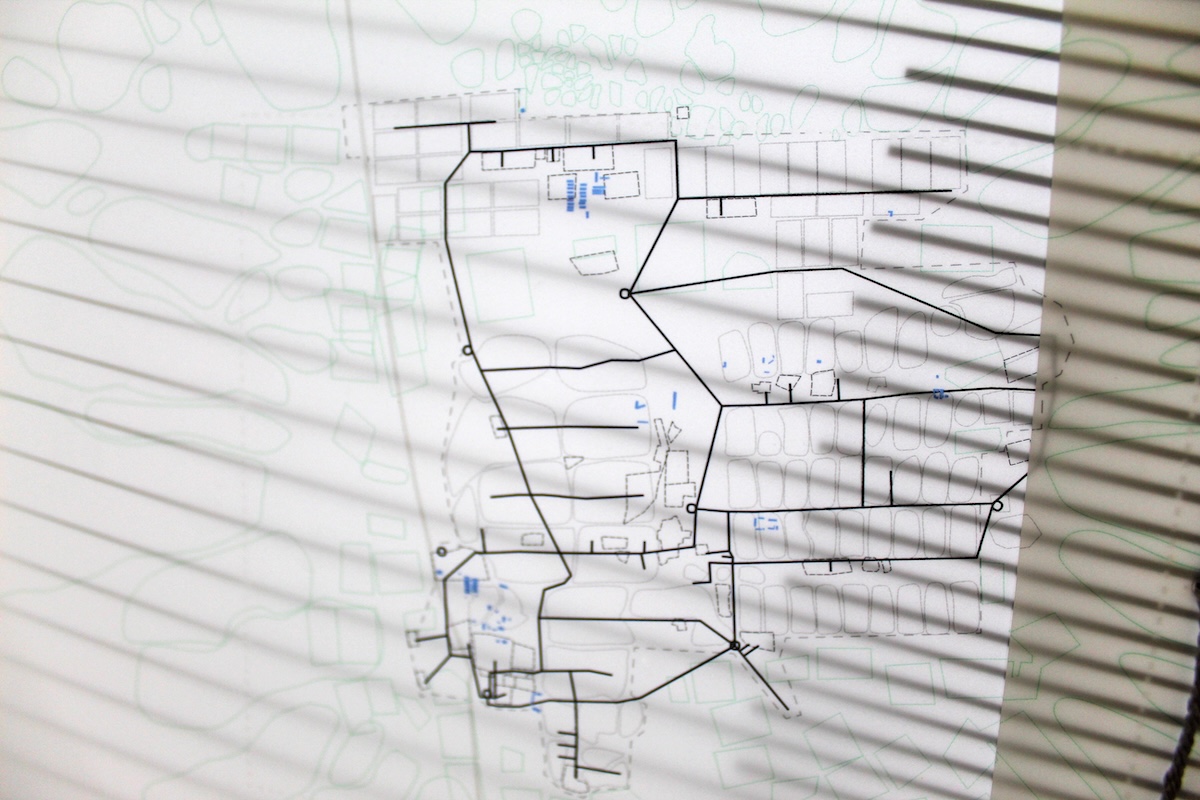
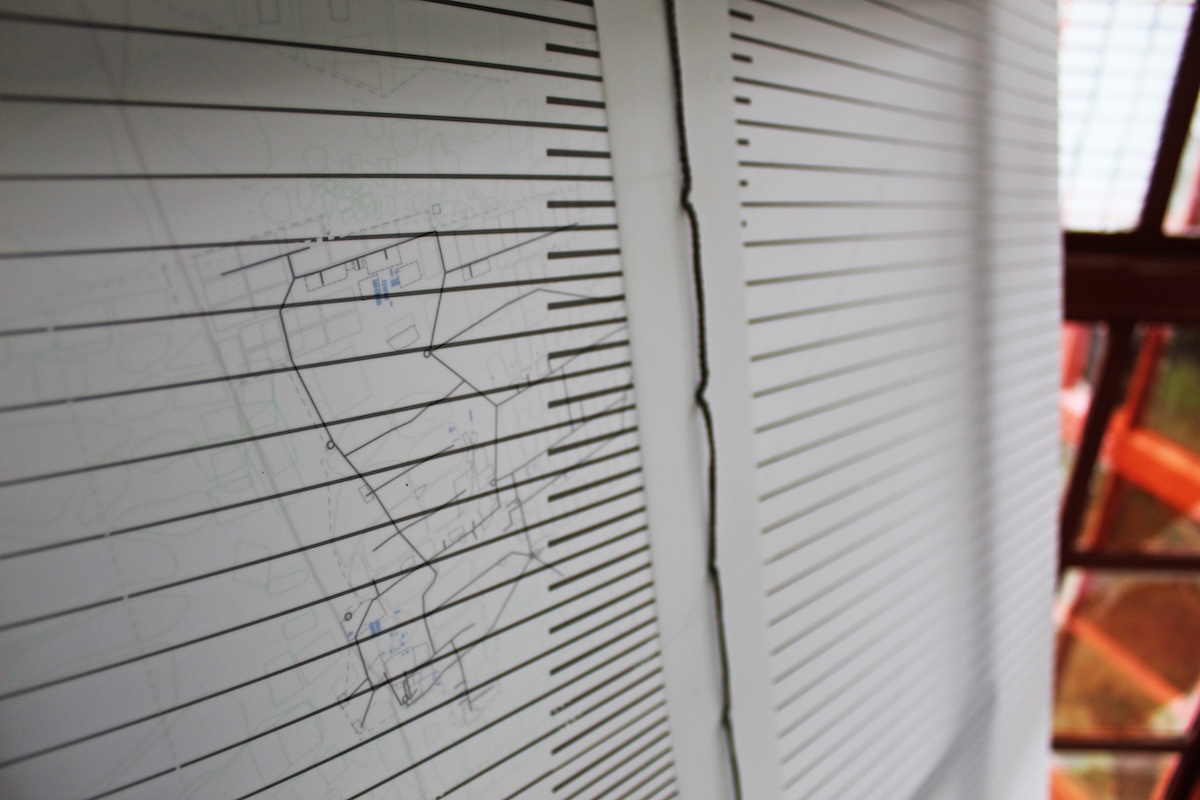
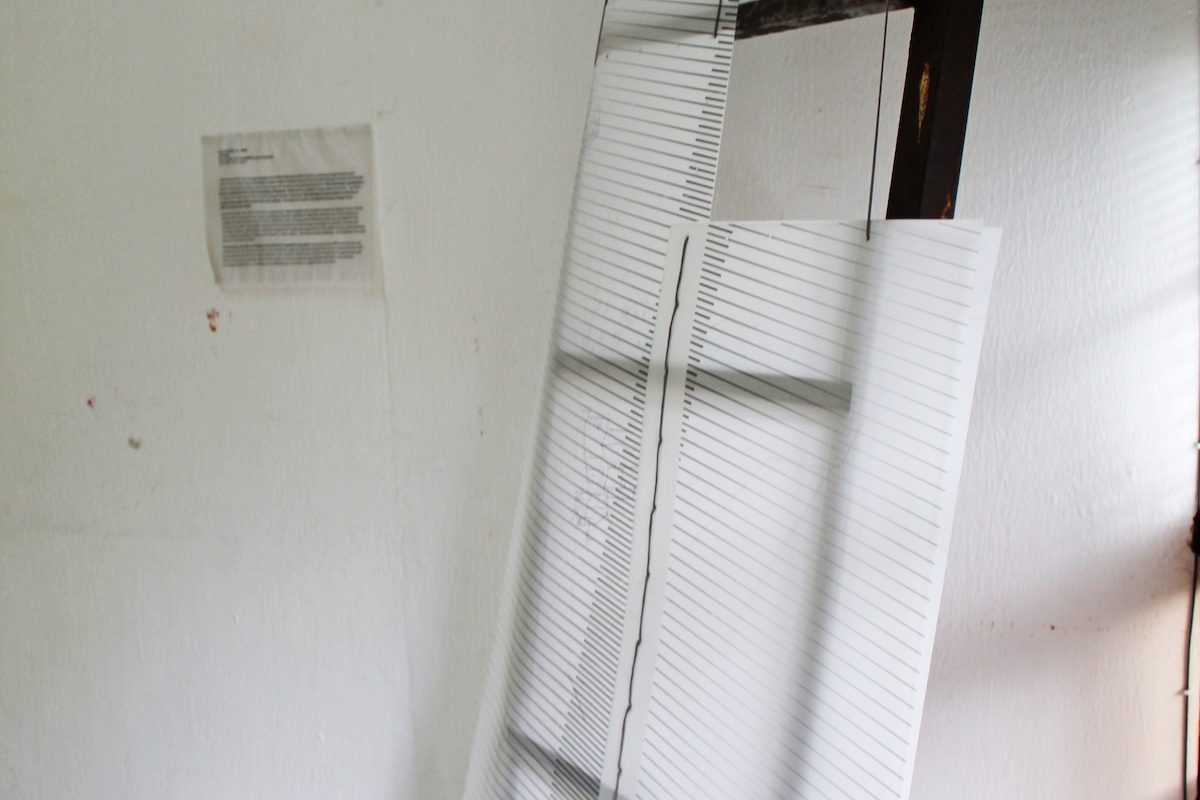
Jitterbug wonders how image-making at extreme distances affects human understandings of place and control. This project loosely combines data on the Dadaab Refugee Camps from United Nations development plans, hand-drawn ground surveys, aerial photography, and satellite imagery.
The first iteration of this work was a drawing that studied a 2003 failure of Landsat 7’s Scan Line Corrector that created gaps in the resulting imagery, which conveyed more about the sensor’s machinery and movement – its way of capturing the world – than it did about the world itself. Elsa MH Mäki uses a technical failure to understand how failure itself reveals a generative method of working: how interfaces of mechanical, computational, and technical “glitches” consolidate into smooth forms that appear intentional and intact.
Jitterbug expands the scale of consideration to capture the growth and evolution of the camp complex around Dadaab over its three-decade history and the imperfect technologies that have snapped up data to represent – to compose – Dadaab, as a place, from extremely far away. Jitterbug questions how we know Dadaab, how we know or remember any place through pictures, and how we get to know one another through – and in spite of – the spectacular, almost invisible array of surveillance technologies that now observe our lives.
James Muriuki
James Muriuki
Untitled
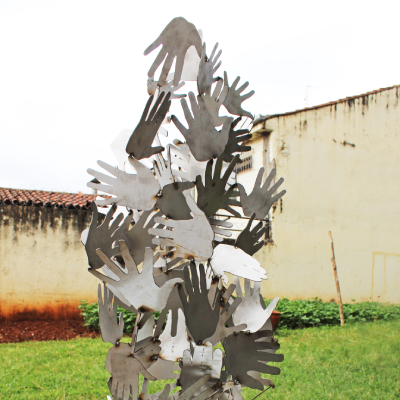
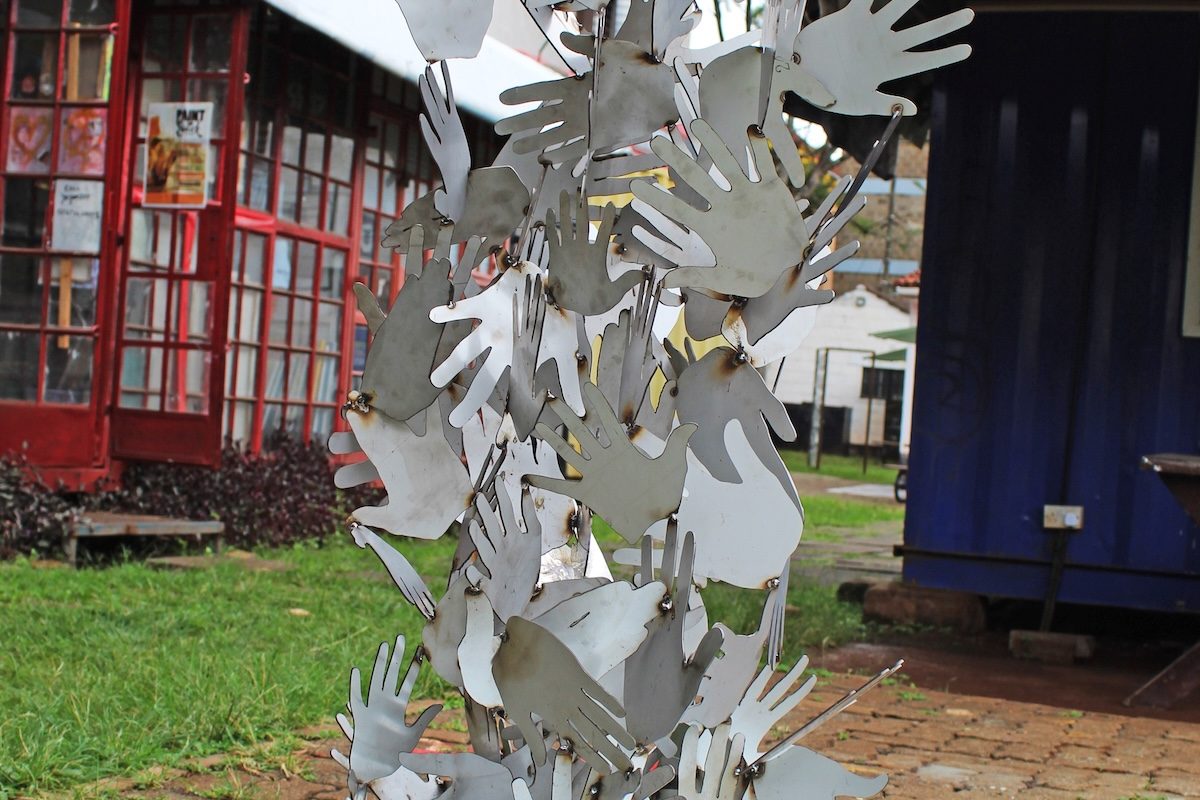
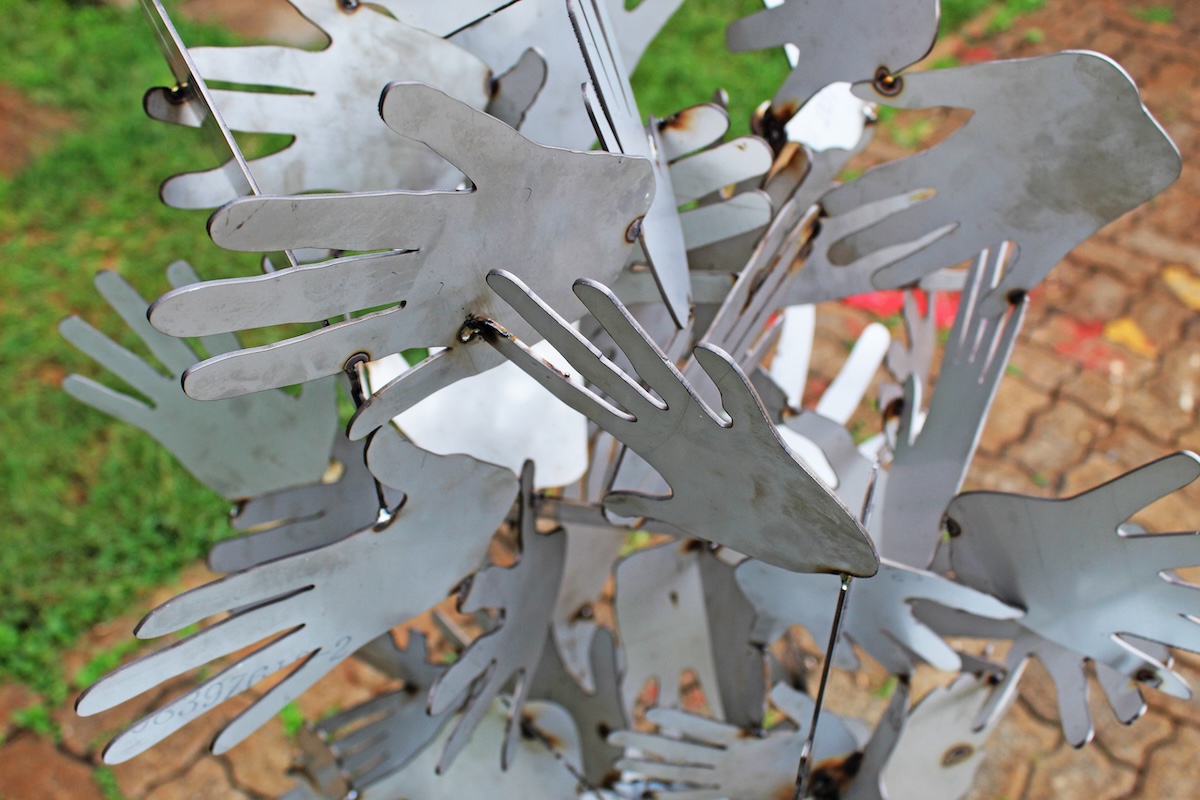
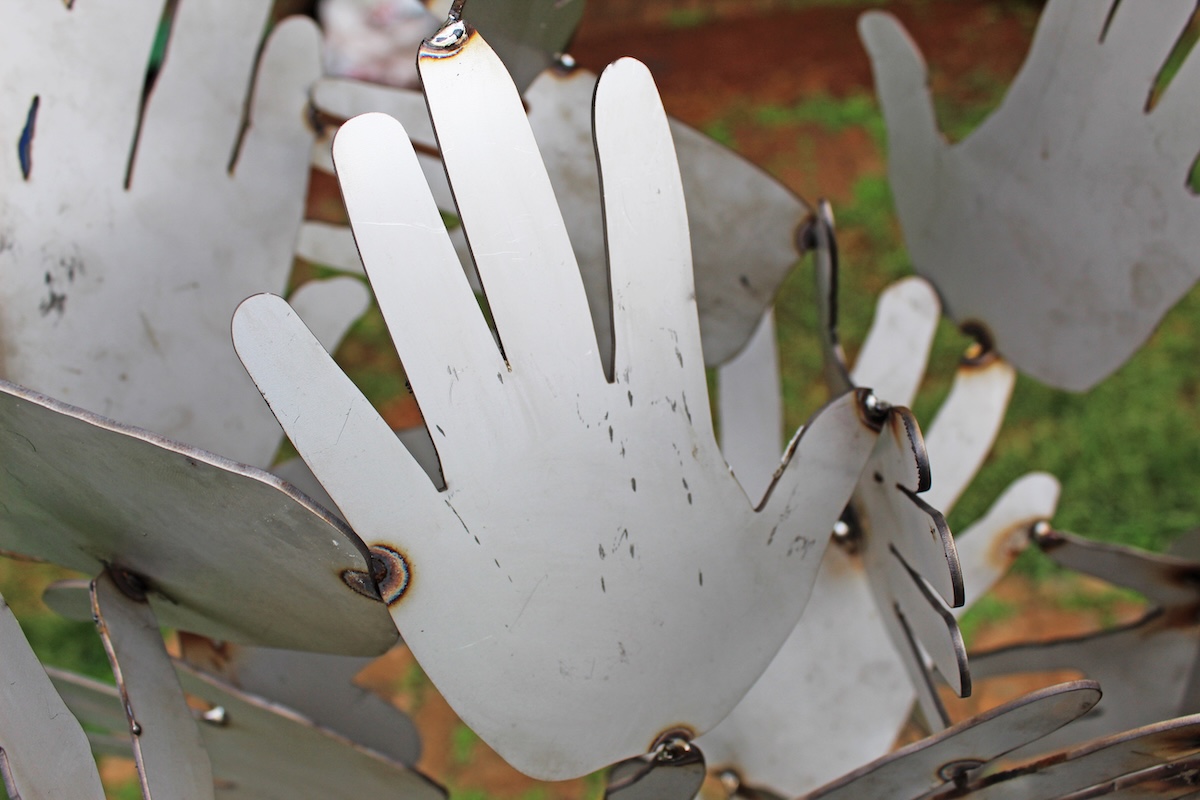
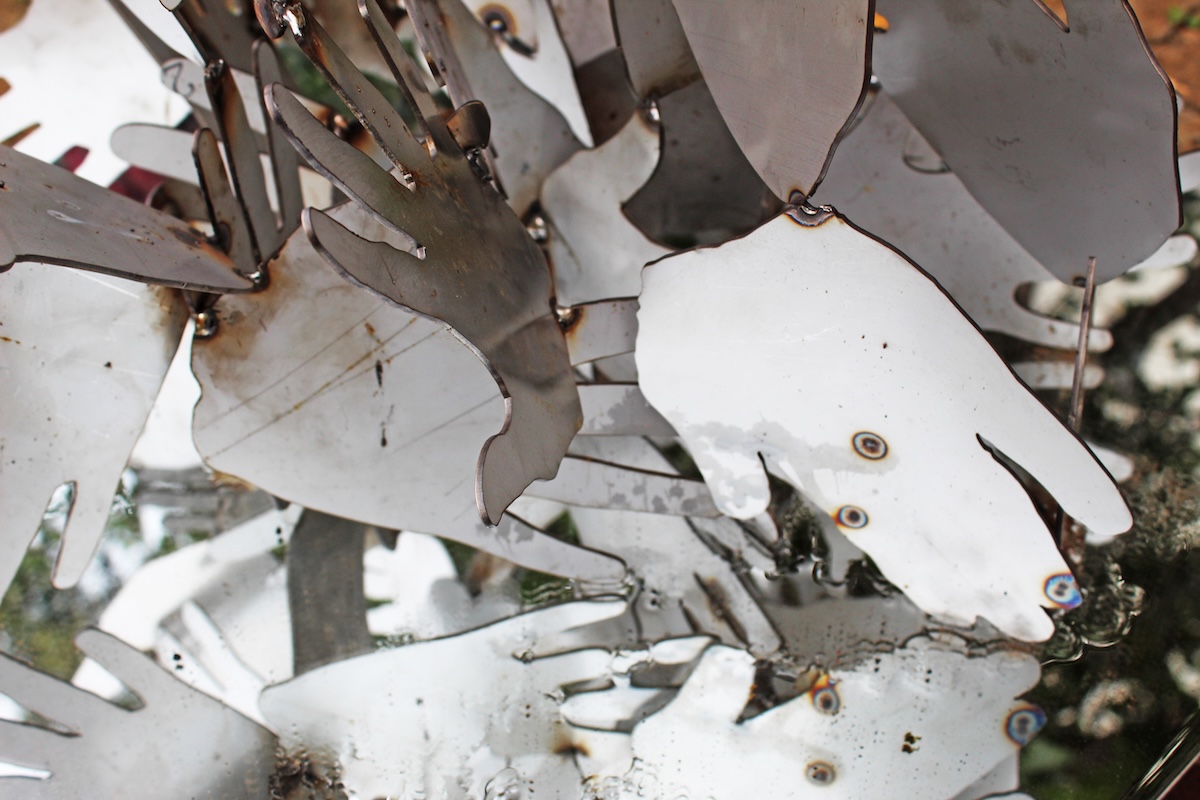
From the walls of caves to the pages of passports, each hand belongs to a unique individual. Yet, hands mark our shared condition; they create a gesture of collective action. Like in the common action of ants, the strength of the gesture of the collective is in putting an organism together. Individuals become a collective, and that collective emerges as a figure. If we think in geological time, it is those collective figures that stand out. Yet they are made from the marks of unique individuals.
This sculpture, Untitled, is made from hand prints gathered by James Muriuki from dozens of people in Nairobi and across the world. From a photograph to a traced silhouette to a stenciled cutout to a metal sculptural form, these layers build upon real gestures that bring together real people. The hands are laser cut from stainless steel, a material that, for its resistance to corrosion, has become synonymous with the kitchen and the hearth and home it recalls. These hands are joined by visible welds. The joints are left as raw as possible, recording the connection between real people– if blemished, then also humane.
AbdulFatah Adam
AbdulFatah Adam
Origins / Soomaaliweyn
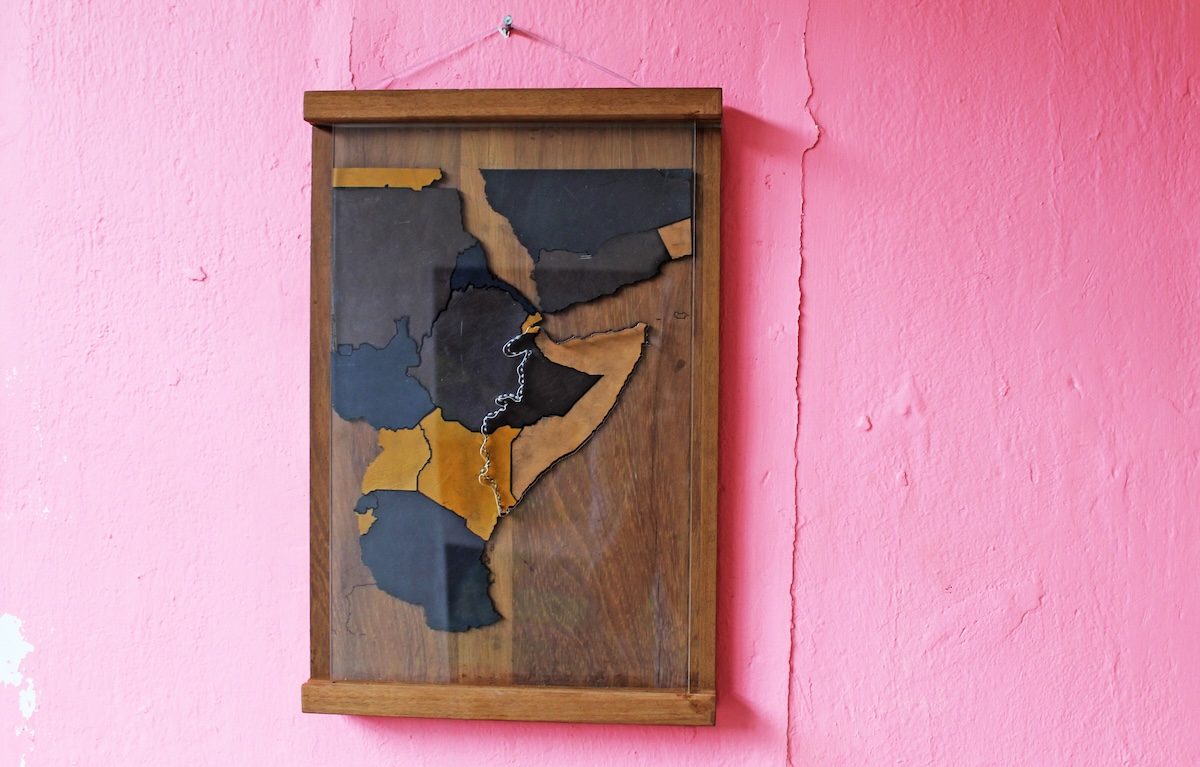
Origins. Some historians claim Somalis are descendants of the pharaohs. Geologists have also claimed the oil deposits in Somalia are greater than those in any other country in the region, even on the Arabian Peninsula. The existence of Dadaab could be attributed to this gift, or curse.
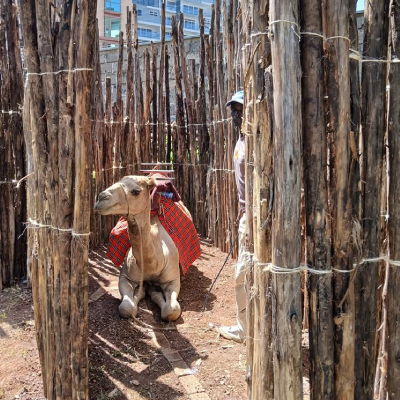
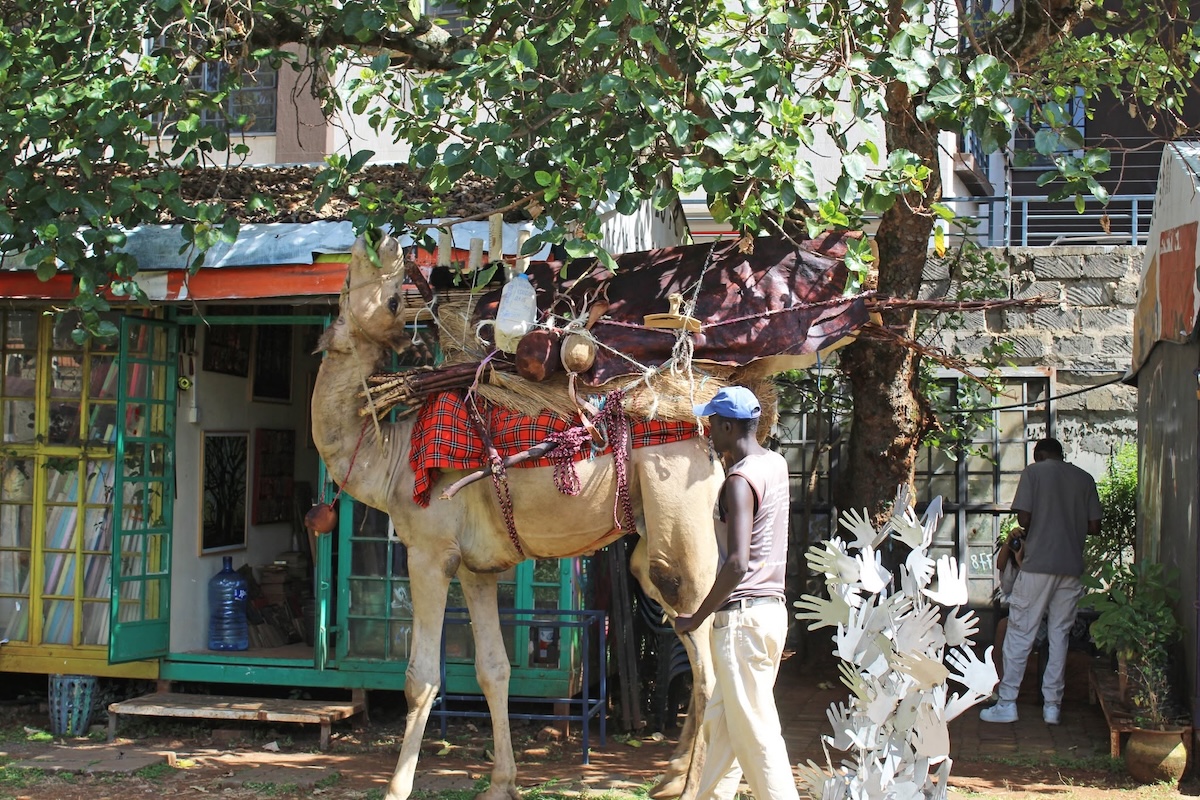
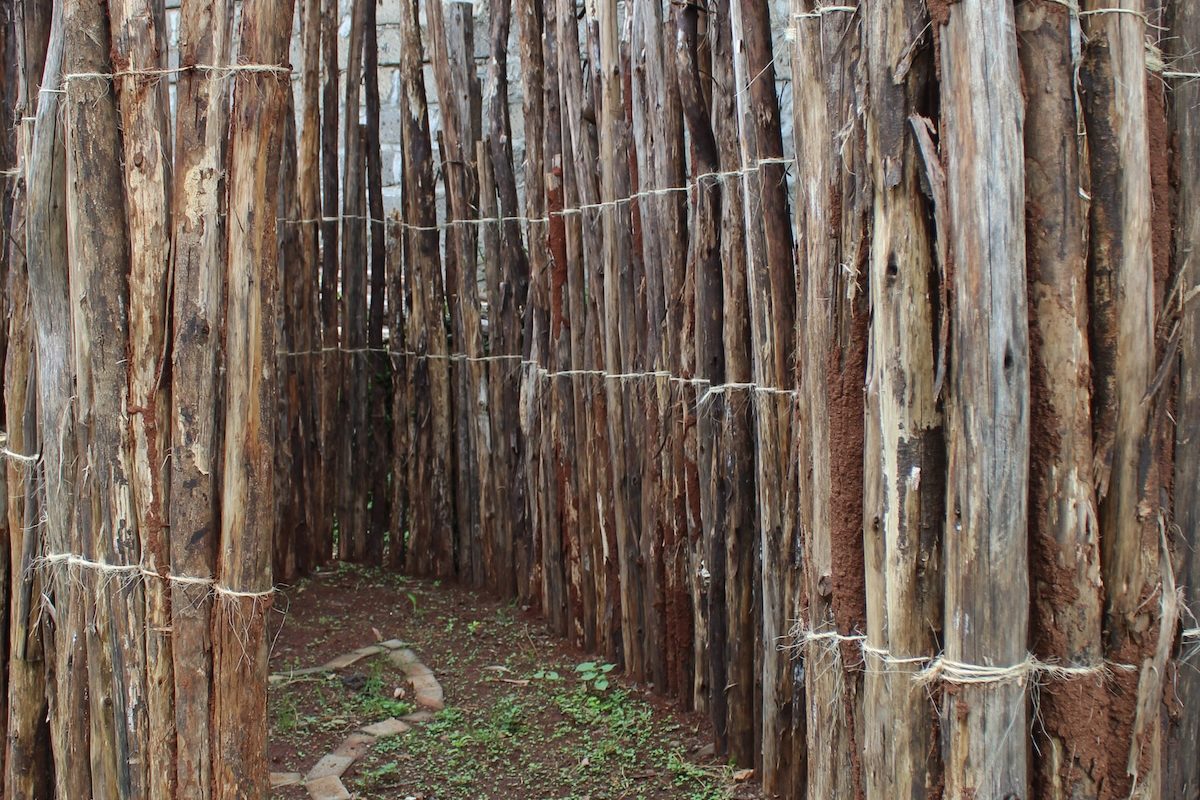
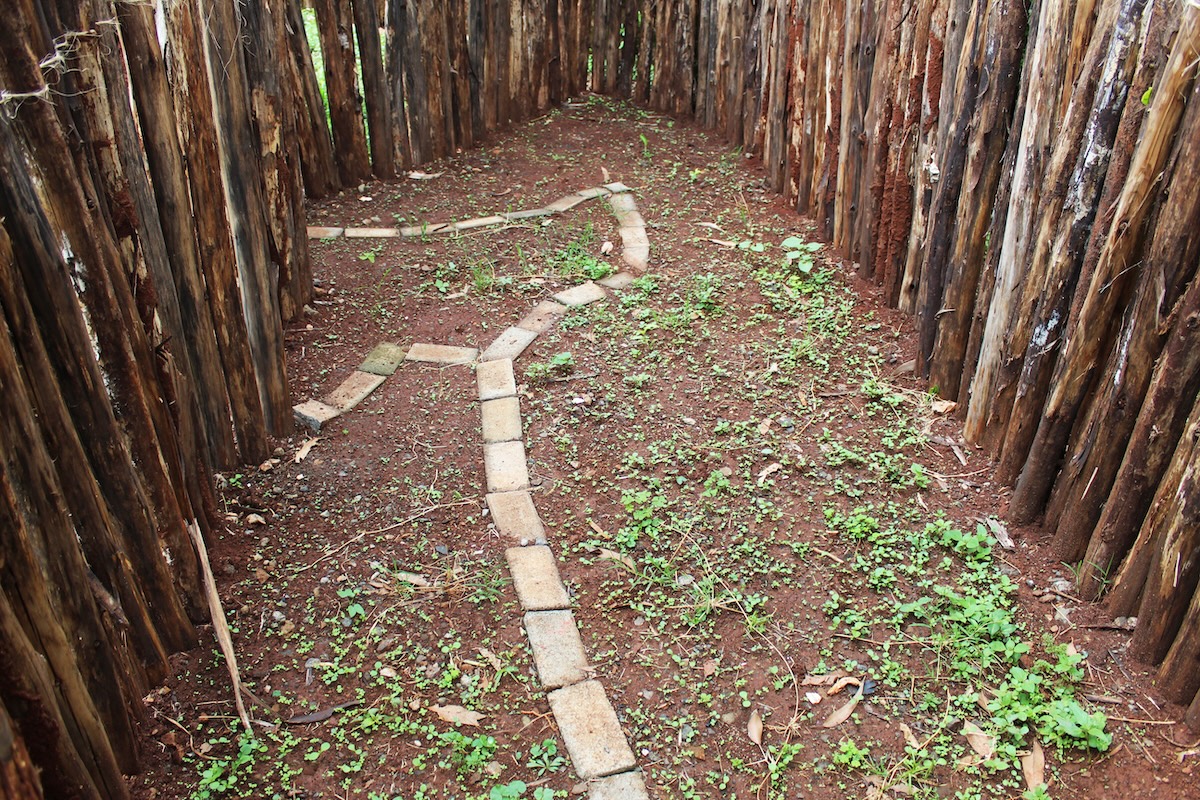
What is the expression of the modern nomad? What is an architecture of pastoralism in the present day? In Origins / Soomaaliweyn, AbdulFatah Adam examines origins in the boundaries and unboundedness of Soomaaliweyn, the Greater Somalia that formed a precolonial political imagination in the region, long before camps in the Kenyan Northeast reinforced the confinements and sedentarizations imposed upon the imaginaries and realities of pastoral life.
Protest Library: Partitions, Borders, Camps
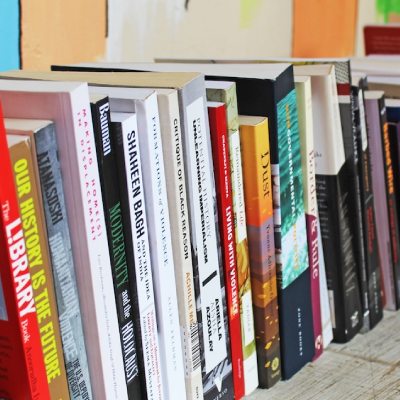
Protest Library: Partitions, Borders, Camps
Curated by “Bombay!” working group (Anooradha Iyer Siddiqi, Anupama Rao, Shayoni Mitra, Kavita Sivaramakrishnan, Debashree Mukherjee) [New York], Sarover Zaidi [Delhi], A.R.T. Library (Art, Resources, Teaching; Annapurna Garimella, Sindhura D. M.) [Bengaluru], Madras Literary Society (Thirupurasundari Sevvel, Uma, Vinayagam) [Chennai], Elsa MH Mäki, Peterson Kamwathi
Achar, Deeptha, and Shivaji K. Panikkar, eds. Articulating Resistance: Art and Activism. New York: Columbia University Press, 2012.
Akcan, Esra. Open Architecture: Migration, Citizenship, and the Urban Renewal of Berlin-Kreuzberg by IBA 1984/87, 10–42. Basel: Birkhäuser, 2018.
Arendt, Hannah. The Origins of Totalitarianism. San Diego, NY, London: Harcourt Brace, 1985.
Atanasoski, Neda. Humanitarian Violence: The Deployment of Diversity. Minneapolis: University of Minnesota Press, 2013.
Azoulay, Ariella Aïsha. Potential History: Unlearning Imperialism. London: Verso, 2019.
Bauman, Zygmunt. Modernity and the Holocaust. Cambridge: Polity, 2017.
Beeckmans, Luce, et al., eds. Making Home(s) in Displacement: Critical Reflections on a Spatial Practice. Leuven: Leuven University Press, 2021.
Brun, Cathrine, and Tariq Jazeel. Spatialising Politics: Culture and Geography in Postcolonial Sri Lanka. London: Sage, 2009.
Chatterji, Roma. Living with Violence: An Anthropology of Events and Everyday Life. New Delhi: Routledge, 2007.
Chitchian, Somayeh, Maja Momic, and Shahd Wari, eds. Inhabiting Displacement: Spaces and Subjects of Alter-Architecture. Basel: Birkhäuser, 2021.
Collins, Larry, and Dominique Lapierre. O! Jerusalem. New York: Simon and Schuster, 1972.
Conrad, Joseph. Heart of Darkness. London: Legend Press, 2020.
Darwish, Mahmoud, Ibrahim Muhawi, and Sinan Antoon. Memory for Forgetfulness: August, Beirut, 1982. Berkeley, CA: University of California Press, 2013.
Das, Veena. Life and Words: Violence and the Descent into the Ordinary. Berkeley: University of California Press, 2006.
Delisle, Guy. Jerusalem: Chronicles from the Holy City. Montréal; New York: Drawn & Quarterly; Farrar, Straus and Giroux, 2012.
Estes, Nick. Our History Is the Future: Standing Rock Versus the Dakota Access Pipeline, and the Long Tradition of Indigenous Resistance. London; New York: Verso, 2019.
Fassin, Didier, and Mariella Pandolfi, eds. Contemporary States of Emergency: The Politics of Military and Humanitarian Interventions. New York: Zone Books, 2010.
Feher, Michel. Nongovernmental Politics. New York: Zone Books, 2007.
Feldman, Allen. Formations of Violence: The Narrative of the Body and Political Terror in Northern Ireland. Chicago: University of Chicago Press, 1991.
Fleetwood, Nicole. Marking Time: Art in the Age of Mass Incarceration. Cambridge: Harvard University Press, 2020.
Forth, Aidan. Barbed-Wire Imperialism: Britain's Empire of Camps, 1876–1903. University of California Press, 2017.
Foucault, Michel, et al. Security, Territory, Population: Lectures at the Collège de France, 1977–78. Basingstoke: Palgrave Macmillan, 2014.
Protest Library: Partitions, Borders, Camps.
Gurnah, Abdulrazak. Map Reading: The Nobel Lecture and Other Writings. London: Bloomsbury Publishing, 2022.
Hailey, Charlie. Camps: A Guide to 21st-Century Space. Cambridge: MIT Press, 2009.
Hansen, Thomas Blom. Violence in Urban India: Identity Politics, Mumbai, and the Postcolonial City. Delhi: Permanent Black, 2005.
Herscher, Andrew, and Anooradha Iyer Siddiqi, eds. Spatial Violence. New York: Routledge, 2015.
Hochberg, Gil. Visual Occupations: Violence and Visibility in a Conflict Zone. Durham: Duke University Press, 2015.
Manto, Saadat Hasan. Mottled Dawn: Fifty Sketches and Stories of Partition. New Delhi: Penguin Books, 1997.
Mbembe, Achille, and Laurent Dubois. Critique of Black Reason. Durham: Duke University Press, 2017.
Mustafa, Seema, ed. Shaheen Bagh and the Idea of India: Writings on a Movement for Justice, Liberty and Equality. New Delhi: Speaking Tiger Books, 2020.
Netz, Reviel. Barbed Wire: An Ecology of Modernity. Middletown: Wesleyan University Press, 2009.
Owuor, Yvonne Adhiambo. Dust. New York: Penguin Random House, 2014.
Pappé, Ilan. The Ethnic Cleansing of Palestine. London: OneWorld, 2015.
Petti, Alessandro, Sandi Hilal, and Eyal Weizman. Architecture After Revolution. Berlin: Sternberg Press, 2013.
Pieris, Anoma. Architecture on the Borderline: Boundary Politics and Built Space. London: Routledge, 2019.
Sabbagh, Mahdi, ed. Their Borders, Our World: Building New Solidarities with Palestine. Chicago: Haymarket Books, 2024.
Sacco, Joe. Palestine. Seattle: Fantagraphics Books, 1996.
Sen, Uditi. Citizen Refugee: Forging the Indian Nation after Partition. Cambridge: Cambridge University Press, 2018.
Sennett, Richard. Flesh and Stone: The Body and the City in Western Civilisation. New York: Norton, 1994.
Sennett, Richard. The Foreigner: Two Essays on Exile. London: Notting Hill Editions, 2017.
Siddiqi, Anooradha Iyer. Architecture of Migration: The Dadaab Refugee Camps and Humanitarian Settlement. Durham: Duke University Press, 2024.
Sorkin, Michael, and Deen Sharp. Open Gaza: Architectures of Hope. Cairo; New York: The American University in Cairo Press, 2021.
Van Pelt, Robert Jan, and Deborah Dwork. Auschwitz: 1270 to the Present. New Haven: Yale University Press, 1996.
Walia, Harsha. Border & Rule: Global Migration, Capitalism, and the Rise of Racist Nationalism. Chicago: Haymarket Books, 2021.
Weizman, Eyal. Hollow Land: Israel’s Architecture of Occupation. New York: Verso, 2017.
Wendel, Delia Duong Ba, and Fallon Samuels Aidoo, eds. Spatializing Politics: Essays on Power and Place. Cambridge: Harvard University Press, 2015.
Zamindar, Vazira Fazila-Yacoobali. The Long Partition and the Making of Modern South Asia: Refugees, Boundaries, Histories. New York: Columbia University Press, 2010.